
Safe skincare during pregnancy
Waterless skincare without parabens, retinol or synthetic preservatives. 100% considered. 0% compromise. From pregnancy through to post-partum.
Your skin is changing. So is your skincare.
Pregnancy is one of the most beautiful - and most demanding - phases your skin will go through. Hormonal change makes it drier, more reactive, and quicker to flare than before. At the same time, almost every parent-to-be ends up asking the same, important question:
"What can I actually still put on my skin without harming my baby?"
The answer is simpler than you'd think. It isn't about going without.
It's about choosing intelligently: products without retinol, without parabens, without synthetic preservatives - but with maximum active power. That's the Fourth Era promise.
A falling oestrogen level and the broader hormonal shift change the skin barrier, increase water loss and make the skin more reactive to ingredients. Often noticeable from the first trimester.
Water-based creams need preservatives like parabens or phenoxyethanol to keep them stable. On the more sensitised skin of pregnancy, those ingredients can sink in deeper than they would otherwise. Waterless skincare avoids the question altogether.
Fourth Era is built on waterless formulas: 100% actives, 0% fillers, 0% preservatives. What goes onto your skin actually nourishes it — for you and your baby.
100%
0%
1
100%
✓ Vegan
✓ pH-conscious
✓ Microbiome-Friendly
✓ Transparent and Authentic
What's safe during pregnancy?
A clear guide to ingredients to keep — and to avoid.
✓ Safe to use
- Natural oils and butters (coconut, jojoba, shea)
- Antioxidants (vitamin E, C)
- Gentle lactic acid below 2%
- Calming actives (chamomile, aloe vera)
- Waterless formulas
- Dermatologist-tested
✗ Avoid
- Retinol & retinoids (teratogenic!)
- Salicylic acid / BHA (systemic absorption)
- Benzoyl peroxide
- Parabens (endocrine-disrupting)
- High-concentration essential oils (oregano, thyme)
- Formaldehyde and formaldehyde donors
Typical skincare challenges during pregnancy
The INCI maze
INCI lists are long and cryptic.
Fourth Era takes the opposite route: transparent formulas, every ingredient explained.
You'll know exactly what's in your jar.
Dry skin & itching
During pregnancy, the skin loses up to 30% more moisture. Water-free skincare delivers 100% active ingredients and provides optimal support.
Baby skin prone to neurodermatitis or allergies is particularly sensitive to fragrances.
Why take the risk?
Ingredients to avoid - a deeper look
Retinol
The problem:
Retinol is a vitamin-A derivative and is teratogenic. It can affect foetal development, especially in the first trimester.
Avoid: Retinol, tretinoin, adapalene, isotretinoin, retinyl palmitate.
The Fourth Era answer: ABBIE relies on antioxidants and gentle actives instead of retinol — visible results, no risk.
Salicylic acid
The problem:
BHA (salicylic acid) can be absorbed systemically at higher concentrations and may cause issues during pregnancy.
Avoid: Salicylic acid (especially above 2%), BHA, acetylsalicylic acid.
The Fourth Era answer: Gentle lactic acid and natural enzymes for exfoliation without systemic absorption risk.
Parabene
The problem:
Parabens (methyl-, propyl-, butyl-) are endocrine disruptors. They mimic hormones and can affect the endocrine system.
Avoid: Methylparaben, propylparaben, butylparaben, all para-esters.
The Fourth Era answer: Waterless formulas that work with no preservatives at all, or with natural alternatives.
| Ingredient | Risk | Status during pregnancy |
|---|---|---|
| Benzoyl peroxide | Moderate systemic absorption possible | ⚠️ Avoid from second trimester |
| Essential oils (high concentration) | Can trigger contractions | ⚠️ Only at low concentration |
| Formaldehyde | Genotoxic, carcinogenic | ✗ Avoid completely |
| Hydroquinone | Systemic absorption possible | ✗ Avoid |
| Vitamin A (high doses) | Teratogenic | ✗ Only topical, low doses |
Why waterless is better
Standard creams with water
have real downsides during pregnancy:
✗ Water as a filler - only 25–30% real actives
✗ Preservatives required - 3–5% per product
✗ Parabens as a default - endocrine-disrupting
✗ Higher absorption through skin
| Aspect | Standard cream | ABBIE |
|---|---|---|
| Water | 60% | 0% |
| Preservatives | 3-5% | 0% |
| Parabens | ⚠️ Often present | 0% |
| Actives | 25-30% | 100% |
Pregnancy skincare - three phases, one routine
Our pregnancy skincare line
ABBIE
For pregnant women, breastfeeding mothers, and babies
✓ 100% actives, 0% water
✓ Paraben-free, preservative-free
✓ May ease dryness and itching
✓ Safe from the first trimester
✓ Dermatologically tested for sensitive skin
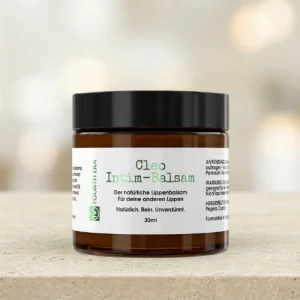
CLEO
After the birth
✓ Specialised formulation
✓ May ease itching
✓ Hormone-free & paraben-free
✓ Gentle, nourishing oils
LEON
From the first trimester
✓ Removes make-up and impurities
✓ No preservatives
✓ A blend of caring oils
✓ For every skin type
EVE
From Pregnancy to Breastfeeding
✓ For face & body
✓ Deeply moisturising
✓ Plant-based actives
✓ Calming & nourishing
Recommended products for pregnancy



What are you really putting on your skin today?
Behind alluring names and beautiful jars often lies a complex world of ingredients.
Do you know exactly what your skincare products are doing?
Use our Ingredient Check to take a look behind the scenes of the cosmetics industry.
We decode the technical terms for you—from valuable antioxidants to the fillers your skin doesn’t need.
Get ready for an “wow” moment.
Simply paste it into the chat using Ctrl + V (or Right-click > Paste).
True.
Undiluted.
Fourth Era Membership

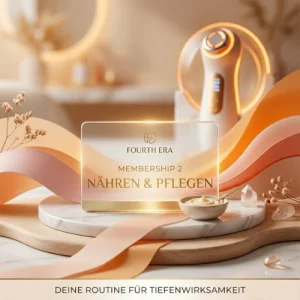
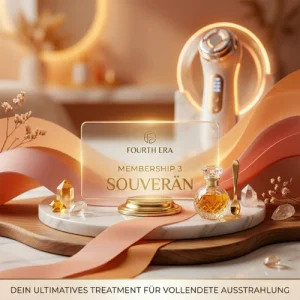

Free
Women's Skincare Guide for Daily Routines
Frequently asked questions about pregnancy skincare
What can I put on my skin during pregnancy?
Pregnancy-safe skincare should be paraben-, retinol- and salicylic-acid-free. Natural oils like jojoba and coconut, antioxidants like vitamins E and C, and gentle actives like chamomile and aloe vera are all fine. Waterless skincare additionally removes the need for synthetic preservatives.
Which skincare is safe during pregnancy?
Safe pregnancy skincare ticks all of these: paraben-free, no retinol or retinoids, no salicylic acid, no benzoyl peroxide, dermatologist-tested. Fourth Era ABBIE and CLEO meet every one of those criteria and are formulated specifically for pregnancy and breastfeeding.
Why are parabens problematic during pregnancy?
Parabens are endocrine disruptors - they can be absorbed by the body and affect the hormonal system. During pregnancy that matters more, because hormones regulate foetal development. Fourth Era products are 100% paraben-free, using natural preservatives or no preservatives at all.
Is retinol dangerous during pregnancy?
Yes, retinol at higher doses is teratogenic. It can affect foetal development. As a result, retinol and all retinoids (tretinoin, adapalene, isotretinoin) aren't recommended during pregnancy. Fourth Era products are entirely retinol-free and offer alternative anti-ageing approaches with safer actives.
What helps with dry skin during pregnancy?
Which ingredients should I avoid during pregnancy?
Retinol & retinoids (teratogenic), salicylic acid / BHA (systemic absorption), benzoyl peroxide, parabens (endocrine disruption), high-concentration essential oils (oregano, thyme), formaldehyde and formaldehyde donors, hydroquinone, and high-dose vitamin A. Fourth Era products are free of all of these.
What's the best skincare post-partum?
Can I use ABBIE on my baby?
ABBIE is paraben-free, retinol-free and dermatologically tested, so it can be used on baby skin where there's dryness or irritation. As always, run it past your paediatrician before first use. Fourth Era also has baby-specific products for optimal care.
What's good intimate care after birth?
The intimate area is especially sensitive after birth. CLEO is built for exactly that phase: paraben-free, hormone-free, gentle, with natural oils and antioxidants. Regular use can ease itching and dryness and support healing.